
Where the high cashback casino bonus in Australia actually leads
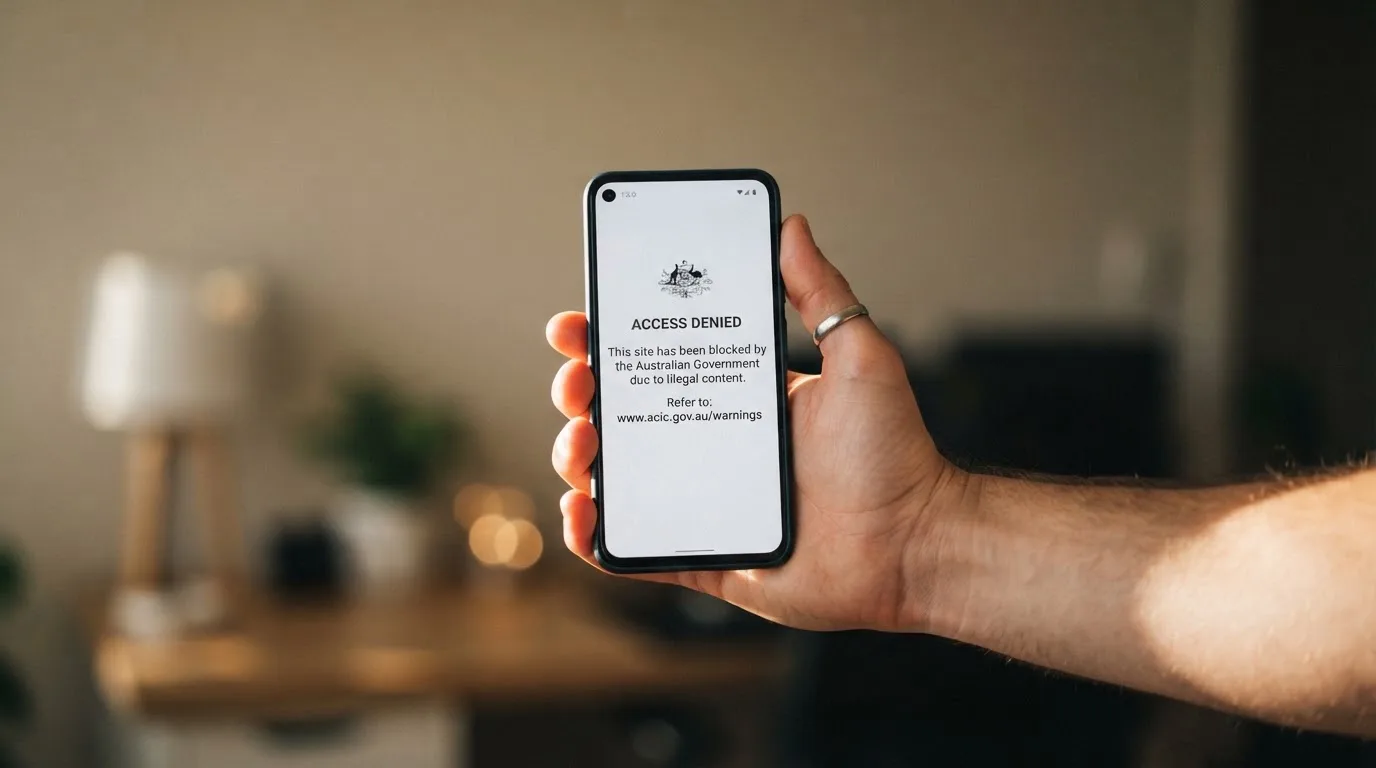
The short answer is not a shortlist. Online casino games cannot be licensed anywhere in Australia, and no offshore operator offering them to Australians is doing so lawfully. The Interactive Gambling Act 2001 — tightened by the Interactive Gambling Amendment Act 2017 and amended again in 2023 — makes the supply of an online casino game or online pokie to anyone in Australia a breach of the Act, and the Australian Communications and Media Authority has spent the past four years chasing the people who do it. A bonus structure with a headline percentage and a tiered ladder sits on the marketing page of an offshore casino. A player in Australia who funds that bonus with a debit card is paying into a site the ACMA has asked Australian internet providers to block.

This page is built around that gap. It lays out the mechanics of a high cashback casino bonus so a reader knows what the marketing word is actually selling — how the percentage works, what turnover it requires, and what the cap on withdrawals looks like. It then sets out the Australian law that puts that bonus outside any licensed frame, walks through the ACMA’s enforcement record against operators running these offers to Australians, and points to what is actually licensable and what player protection the law gives a person who wants it.
Currency and dates were checked as of 29 October 2026 against the ACMA’s formal warning register and the published blocking-round notices.
Table of Contents
- What “high cashback” actually means at a casino
- The Australian legal frame for a cashback casino bonus
- The ACMA’s enforcement record against cashback-casino operators
- Player protection: BetStop and the limits on what it covers
- Crypto cashback: the offshore side of the offer
- Cashback bonuses on the licensed Australian side
- What a reader comparing offers actually has to weigh
- FAQ
What “high cashback” actually means at a casino
A cashback bonus is the casino returning a slice of what the player has lost over a defined period — a day, a week, or a month — either as real cash or as bonus funds that have to be wagered before they can be withdrawn. The percentage on the offer page is the headline figure: 10%, 15%, 20%, sometimes higher, often stepped so the first slice of losses is paid back at a lower rate and the next slice at a richer one. A “high cashback” offer is one that sits towards the top of that scale, usually with a tiered ladder, sometimes with a weekly leaderboard.

Three things decide whether the offer is worth claiming:
- Real cash or bonus funds. Cashback paid as real money lands in the withdrawable balance; cashback paid as bonus funds sits behind a wagering requirement that has to be cleared before withdrawal. A 20% cashback in bonus funds with a 10x turnover on the returned amount costs roughly ten times the bonus amount in additional play before it can be taken out.
- The cap on the returned amount. Some offers cap the dollar value of cashback at a fixed ceiling per period. A 25% cashback with a A$200 cap and A$800 of weekly losses pays back A$200, not A$200 — the cap is the lower number.
- The net-loss calculation. The casino usually calculates cashback on net losses over the period — total wagers minus total winnings — not on every dollar staked. A player who has a big win in the period sees their cashback shrink, because the net figure has moved in their favour.
These three together are the offer’s real shape. The headline percentage is the smallest part of it.
How a cashback offer stacks against a deposit match
A deposit match is a percentage added on top of what the player has put in: a 100% match on a A$100 deposit gives a A$100 bonus. The match usually carries a wagering requirement of 30x to 50x the bonus amount, sometimes the bonus plus the deposit together. The cashback offer, by contrast, is calculated on losses the player has already taken, and the wagering requirement — where it applies at all — sits on the smaller returned amount rather than on the deposit.
A deposit match rewards depositing. A cashback offer rewards losing. They are not the same instrument with different names; they are different instruments aimed at different parts of a player’s bankroll cycle. A reader comparing the two on headline percentage alone is reading past the structure.
The mechanics inside the cashback formula
A worked example. A casino runs a 15% weekly cashback on net losses, paid as bonus funds with a 5x wagering requirement on the returned amount, with a weekly cap of A$500. A player has net losses of A$2,000 in the week.
- The headline percentage: 15% × A$2,000 = A$300.
- The cap is not binding; A$300 is below the A$500 ceiling.
- The wagering requirement: 5x × A$300 = A$1,500 in additional wagering before the cashback can be withdrawn.
That A$1,500 is the real cost of the bonus. The cashback as advertised is A$300; the cashback in cleared funds, after the wagering requirement is met at the casino’s stated house edge, is closer to A$1,500 × (1 − RTP), the slice of that turnover the house keeps. The reader’s job is to read the percentage as the start of the calculation, not the end of it.
What terms typically cap the offer
Three terms recur across the operators that run cashback programs:
- Maximum cashback per period. Either a fixed dollar figure (A$200, A$500, A$1,000) or a percentage of the player’s deposits. The cap determines the ceiling regardless of how big the loss was.
- Minimum loss to qualify. A floor of A$10 or A$20 in net losses before any cashback is paid. Players who break even in the period receive nothing.
- Eligible games. Most cashback programs exclude live dealer tables and a short list of high-RTP slots. Where the cashback applies to slots only, the wagering requirement is met on a category where the house edge is wide enough for the casino to recover the returned amount.
These three are not the only terms a reader will meet. Game weighting — slots at 100%, table games at 10% or 20% — applies to the wagering requirement where one exists. Maximum bet limits during the wagering period cap the stake per spin. A withdrawal ceiling on bonus-derived winnings caps how much can be taken out even after the wagering requirement is met.
The Australian legal frame for a cashback casino bonus
No state or territory of Australia issues a licence for online casino games or online pokies. The Interactive Gambling Act 2001 makes the supply of a “prohibited interactive gambling service” — an online casino game, an online pokie, in-play betting — to a person physically present in Australia an offence. The 2017 amendment gave the ACMA the power to issue formal warnings, accept enforceable undertakings, and direct Australian internet service providers to block illegal sites. The 2023 amendment extended credit-card bans to digital wallets and credit-related products on licensed wagering services. The 2026 amendment passed Parliament on 19 August 2026 and tightens advertising and inducement rules, with a commencement date of 1 January 2027.
The legal picture is therefore this:
- The provider. An offshore casino offering online casino games to an Australian player is committing the offence. An Australian player is not the target of the Act, but the player has no Australian consumer protection, no Australian complaints body, and no recourse if a withdrawal is refused or the site disappears with a balance on it.
- The payment. Credit cards, credit-related products, and digital currency are banned as a means of paying for licensed online wagering in Australia, with effect from 11 June 2024. A site that takes a credit card or a crypto deposit from an Australian is not on the licensed side of the fence. Legal deposit routes for licensed wagering are debit card, bank transfer, PayID and Osko, and BPAY.
- The site. An offshore casino offering online casino games to Australians can be blocked by the ACMA via the internet provider. A balance held on a blocked site is held offshore, with the dispute sitting outside any Australian regulator.
- Self-exclusion. BetStop, the National Self-Exclusion Register, has been live since August 2023. It binds Australian-licensed online and phone wagering services — bookmakers on sports and races. An offshore casino is not connected to it; signing up for BetStop does not exclude a player from an offshore casino.
The Net result for a reader comparing offers: the high cashback bonus that headlines on an offshore casino’s marketing page sits outside the Australian regulatory frame in three different directions at once — the offer itself is unlawful supply, the payment route may breach the credit rules, and the site can be blocked.
What is actually licensable
What can be licensed and is licensed in Australia is wagering on races and sport placed before the event, lotteries, and keno. The Northern Territory Racing and Wagering Commission regulates 52 of Australia’s online bookmakers, including Sportsbet, Bet365 and Ladbrokes. The commission has no full-time staff and meets once a month in Darwin. Bookmakers are licensed in the Territory for tax reasons; the rest of the regulatory architecture sits at the federal level through the ACMA and the Australian Transaction Reports and Analysis Centre (AUSTRAC).
A reader looking for a cashback-style offer on a licensed product — a refund on a losing multi, a concession on racing form — will find one on a bookmaker, not on a casino. The licensed side of the fence is a different product.
Tax and winnings
Winnings of a recreational player are not assessable income under section 6-5 of the Income Tax Assessment Act 1997, and losses are not deductible, unless the person is carrying on a business of gambling. The tax treatment is not the issue; the legal availability of the product is.
The ACMA’s enforcement record against cashback-casino operators
The ACMA’s blocking and warning activity is the most concrete piece of evidence the page carries on how the prohibition is applied. The numbers and dates below come from the ACMA’s own publications and from a 26 June 2026 industry report on that round.
As of June 2026, the ACMA had asked Australian internet service providers to block 1,751 illegal gambling and affiliate marketing websites since the first blocking request in November 2019, and more than 230 unlicensed gambling services had left the Australian market since enforcement was strengthened in 2017. The June 2026 round alone added 12 more blocking requests: 7Signs, ChromaBet, Donbet, Duospin, Freshbet, Slots Gem, Jacks Club, Lucky Start, Pointsbetz, Spinrise, Vinyl Casino and Wildsino.
A running total of 1,751 blocked sites over roughly six and a half years of active enforcement — from the first blocking request in November 2019 through June 2026 — works out at somewhere in the range of 20 to 30 new blocking requests per month on average across that period, with the rate higher in recent rounds as the ACMA has stepped up activity. The pace is what the number tells a reader who is weighing the chances of an offshore casino being available in six months.
H2 Gambling Capital’s 2025 report estimates that Australians lose about A$3.9 billion a year to illegal gambling sites, and that the share of gambling going through legal channels fell from 74% in 2021 to 64%.
Formal warnings the ACMA has issued against operators offering cashback-style bonuses
The ACMA’s formal warnings are published on its own register. The list below is the record of action against operators that have run cashback programs and other inducements aimed at Australian players. Each is the operator named by the ACMA at the date the warning was issued, on the date the ACMA publishes.
| Brand | ACMA action and date | Operator named by the ACMA | Payment-method coverage in research |
|---|---|---|---|
| RocketPlay | Formal warning, March 2026 (Pulsup Ltd); earlier Dama N.V., May 2022 | Pulsup Ltd (Rocketplay); Dama N.V. | Listings reference Gamblinginsider |
| Level Up Casino | Formal warning, May 2022 | Dama N.V. | Westpac gambling-block documentation |
| Woo Casino | Formal warning, March 2025 | Dama N.V. | — |
| Spirit Casino | Formal warning, May 2025 | Dama N.V. | — |
| National Casino | Formal warning, July 2025 | Consolutetish S.R.L. | ACMA register, AUSTRAC, BetStop |
| Bizzo Casino | Formal warning, July 2025; earlier 2022 warning to TechSolutions | Consolutetish S.R.L.; TechSolutions (CY) Group Limited / TechSolutions Group N.V. | Gamblinginsider listings |
| Ignition Casino | Formal warning, July 2025 | Bamboo Media | — |
| Instant Casino | Formal warning, February 2025 | EOD Code SRL | Ecopayz and PayID documentation |
| Jackbit | Formal warning, April 2026 | Ryker B.V. | — |
| Casino Intense | Formal warning, April 2025 | Sterplay Holding Ltd | AUSTRAC, BetStop, Gamblinginsider |
| Sky Crown | Formal warning, September 2022 | Hollycorn N.V. | — |
The shape of the record is what it is: the same operator names recur across multiple brands, and the warnings have continued across 2022, 2024, 2025 and 2026. A reader who recognises a brand from this list on a comparison page elsewhere is looking at an operator the ACMA has acted against for offering that very service to Australians.
Player protection: BetStop and the limits on what it covers
BetStop, the National Self-Exclusion Register, has been live since August 2023. A person who registers with BetStop is excluded from marketing by all Australian-licensed online and phone wagering services, and the licensed operators are required to close any account the person holds and refuse to open new ones. The exclusion can be set for a minimum period of three months, with no maximum.
What BetStop does not do is just as important as what it does:
- It binds licensed operators. BetStop is enforced by ACMA-licensed wagering services. An offshore casino offering online casino games to Australians is not licensed in Australia and is not connected to BetStop. A player registered with BetStop is not excluded from an offshore casino.
- It does not bind land-based venues. BetStop is the national online and phone register. State and territory land-based self-exclusion schemes cover pubs, clubs and casinos at the venue level; a player who needs venue-level exclusion needs the relevant state scheme as well.
- It does not freeze funds at an offshore site. If a player has a balance on an offshore casino, that balance sits outside any Australian regulatory frame. BetStop cannot move it, hold it, or return it.
For a reader who wants to step back from gambling entirely, the order is: register with BetStop for the online wagering side, register with the relevant state or territory scheme for venue-level exclusion, contact the offshore operator directly to close any account held there, and contact the bank to set a gambling block on eligible cards.
Bank gambling blocks
The four major Australian banks — ANZ, Commonwealth Bank, National Australia Bank and Westpac — all offer card-level gambling blocks that can be turned on through the bank’s app.
- Westpac. The gambling block works at card level: it refuses authorisation of transactions registered under the merchant category code “Betting/Casino Gambling” on eligible personal credit and debit cards.
- ANZ. The gambling transaction block, activated in the ANZ app, also blocks gambling transactions made through a digital wallet such as Apple Pay on an eligible card, not just the physical card. Once turned on, removing the block again requires a 48-hour waiting period, and ANZ warns that not all gambling transactions will be blocked and that some non-gambling transactions might be blocked in error.
- Commonwealth Bank. The gambling lock is applied to eligible cards via the CommBank app, and the bank states it cannot guarantee all gambling-related purchases will be stopped.
By the end of 2025, Apple Pay, Google Pay and Samsung Pay transactions collectively accounted for around 45% of all card payments in Australia by number. The card-level block matters because the wallet sits on top of the card: blocking the card blocks the wallet as well, where the bank’s app is configured that way.
The card block does what the merchant category code allows. Transactions coded “Betting/Casino Gambling” are blocked; transactions coded under a different merchant category — a generic e-commerce code, for instance — are not. An offshore casino that registers under a non-gambling MCC will not be stopped by the card block. The block is a strong tool but not a complete filter.
Where to get help
The National Gambling Helpline is 1800 858 858 — free, 24/7, with online chat at Gambling Help Online. The helpline is staffed by counsellors and is the front door for anyone who wants to talk about a gambling problem, whether they want to use BetStop, set a budget, or talk to a financial counsellor.
Crypto cashback: the offshore side of the offer
A reader who searches for “crypto casino cashback” or “bitcoin casino cashback” is asking a more specific question: can a cryptocurrency-funded casino offer cashback in the same way as a fiat one? The answer is yes, mechanically — the cashback structure is the same — but the legal frame is the same too, and on the Australian side it is tighter.
Credit cards, credit-related products and digital currency are banned as payment for licensed online wagering in Australia with effect from 11 June 2024, with penalties up to A$247,500 for operators. A licensed Australian bookmaker cannot take a Bitcoin deposit. An offshore casino that does is not on the licensed side of the fence.
The mechanics on the offshore side are not different from the fiat side. A 20% weekly cashback paid as bonus funds with a 5x wagering requirement works the same way whether the deposit was Bitcoin or a debit card. The percentage is calculated on net losses, the cap applies, the eligible-game list applies, the game-weighting applies. Where the crypto offer differs from a fiat one is on the payment edges:
- Deposit. Crypto deposits settle on the blockchain and are not blocked by a card-level gambling block. The card block does not stop a transfer from a self-custody wallet to a casino wallet.
- Withdrawal. Crypto withdrawals settle on the blockchain and bypass any Australian banking channel. The winnings arrive at a wallet address the player controls, not at a bank account the bank can monitor.
- Reporting. AUSTRAC’s threshold-transaction-report rule, which requires reporting of transfers of A$10,000 or more, applies only to physical cash. Ordinary electronic bank transfers are not subject to that per-transaction reporting requirement, regardless of the amount sent.
A reader weighing a crypto cashback offer against a fiat cashback offer is weighing two routes to the same offshore site. The structure of the cashback is not the difference. The difference is on which side of the banking system the transaction sits.
The PayID and Osko channel
PayID, on the licensed Australian side, is a name resolution layer on the New Payments Platform. A bank transfer to a PayID arrives in under a minute, 24/7 including weekends, whether addressed to a BSB and account number or to a PayID. The receiving account holder’s name is shown before the transfer is sent. AP+, the platform operator, warns that being asked to transfer money to a PayID on an illegal gambling site almost certainly means a scam site.
PayID-based instant transfers are available at over 100 Australian financial institutions. More than 25 million PayID identifiers were registered on the New Payments Platform as of April 2025. The platform went live on 13 February 2018, is owned by New Payments Platform Australia Ltd — a non-profit whose 13 shareholders include the Reserve Bank of Australia and the major banks — and participants must keep monthly platform outages to no more than two minutes.
BPAY, run by the same parent company (Australian Payments Plus, the merged entity formed in September 2021 from BPAY Group, eftpos and NPP Australia), operates as a bill-payment service. The payer enters the Biller Code and the Customer Reference Number printed on the bill. BPAY has been running since 18 November 1997, is available at over 140 banks and financial institutions, and is offered by over 95,000 businesses.
A licensed Australian bookmaker takes PayID, Osko and BPAY for deposits. An offshore casino does not — the licensed deposit routes are not available to it. An offshore casino’s deposit page is the diagnostic: a PayID or BPAY deposit box is the licensed side; a credit card box or a Bitcoin address is the offshore side.
The card networks on the Australian side
American Express was established in 1850 as a freight-forwarding company and became a card issuer, launching its first charge card on 1 October 1958. Unlike Visa and Mastercard’s four-party networks, Amex traditionally issues cards and processes transactions itself as a three-party scheme. The Reserve Bank of Australia’s July 2025 review proposes removing surcharges only on eftpos, Mastercard and Visa card transactions, explicitly leaving American Express outside the scope of the proposed surcharge ban.
The reason this matters on the page: an Australian-licensed bookmaker that takes a Visa or Mastercard debit card is taking a card on a network the Reserve Bank has looked at. An offshore casino taking an American Express card from an Australian is operating on a network the Reserve Bank has deliberately left outside the surcharge reforms, and on a product the licensed side of the Australian market does not offer. The card network a casino’s deposit page accepts is one of the indicators of which side of the regulatory fence it sits on.
Apple Pay itself does not charge fees to consumers, in stores, online or in apps; any surcharge comes from the merchant’s own card-processing fees. Apple also states that transaction limits and PIN requirements for Apple Pay purchases are set by the card issuer or merchant, not by Apple itself. The wallet sits on top of the underlying card, and the card-level gambling block sits underneath it where the bank has configured the block that way.
Cashback bonuses on the licensed Australian side
What the licensed side of the Australian market offers is not a casino cashback bonus. It offers concessions on racing and sports wagering products — a refund on a losing multi, a percentage back on net losses over a week on the racing book, a stake-back concession on selected events. These are not structured like the offshore casino cashback ladder. They sit inside a product that is licensed, that is connected to BetStop, and that the ACMA can hold to account.
A reader looking for a refund on losses on a product they are licensed to use in Australia will find one on a bookmaker. A reader looking for a high cashback casino bonus will not, because the product does not exist on the licensed side. The page is built around that gap.
What a reader comparing offers actually has to weigh
The offer on the marketing page of an offshore casino is a percentage, a cap, and a wagering requirement. The frame around the offer is the legal one. A reader weighing the offer is weighing three things at once:
- The arithmetic of the bonus. The percentage is the smallest part. The cap, the wagering requirement, the eligible-game list, and the withdrawal ceiling together decide what the offer is worth in cleared funds.
- The legal frame. The site is offshore, the bonus is unlawful supply under the IGA 2001, the site can be blocked by the ACMA, and the balance held on it sits outside any Australian regulatory frame.
- The player protection tools. BetStop binds Australian-licensed wagering services; the card-level gambling blocks at the four major banks stop transactions coded under the gambling merchant category code; the National Gambling Helpline is 1800 858 858.
The 2026 reform — the Interactive Gambling Amendment (Gambling Reform) Bill 2026, passed on 19 August 2026, with advertising and inducement measures commencing on 1 January 2027 — is law with a start date. It tightens what licensed operators can advertise and offer, and it shifts the frame around inducements further towards the licensed side. On a page read in 2026, the Bill is enacted but not yet in force.
FAQ
How does a cashback bonus differ from a deposit match bonus?
A deposit match is a percentage added on top of what the player has put in, usually with a wagering requirement of 30x to 50x the bonus amount, sometimes the bonus plus the deposit together. A cashback bonus is calculated on losses the player has already taken over a defined period and is paid back as a percentage of those losses, with a much smaller wagering requirement (often 1x to 10x) on the returned amount. The two are different instruments aimed at different parts of a player’s bankroll cycle.
Is cashback normally paid as real money or as bonus funds?
Both, depending on the casino. The bigger cashback programs — the “high cashback” tier — usually pay in bonus funds with a wagering requirement attached, sometimes with a withdrawal ceiling on what the bonus-derived winnings can return. The smaller, simpler offers on the licensed side of the Australian market are more often paid as a real-money concession inside the wagering product. Where the cashback is paid as bonus funds, the cleared value is closer to the wagering turnover multiplied by the house edge, not to the headline percentage.
Is it legal for an online casino to offer cashback to players in Australia?
No. The Interactive Gambling Act 2001 makes the supply of a prohibited interactive gambling service — an online casino game or online pokie — to a person physically present in Australia an offence. The 2017 amendments gave the ACMA the power to issue formal warnings and direct ISPs to block illegal sites. The ACMA’s enforcement record shows how that prohibition has been applied across 2022, 2024, 2025 and 2026, and the 2026 reform Bill tightens inducement rules further from 1 January 2027.
Can a crypto casino offer cashback in the same way as a fiat one?
Yes, mechanically — the cashback structure is the same percentage, the same cap, the same wagering requirement. Where the crypto offer differs from the fiat one is on the payment edges: crypto deposits and withdrawals settle on the blockchain and bypass any Australian banking channel, so the card-level gambling block does not stop the deposit and the bank does not see the withdrawal. The legal frame is the same — the Interactive Gambling Act 2001 and the credit-card ban that took effect on 11 June 2024 cover licensed Australian wagering, and an offshore crypto casino is not on the licensed side.
What terms typically cap how much cashback can be earned?
Three terms recur. First, a maximum cashback per period, either a fixed dollar figure (A$200, A$500, A$1,000) or a percentage of the player’s deposits; the cap is the ceiling regardless of how big the loss was. Second, a minimum loss to qualify, often A$10 or A$20 in net losses, below which no cashback is paid. Third, a list of eligible games, with most cashback programs excluding live dealer tables and a short list of high-RTP slots. Game weighting and maximum bet limits during the wagering period are also common.
Does a high cashback percentage make up for other unfavourable bonus terms?
Not on its own. The percentage is the smallest part of the offer. A 25% cashback with a A$200 cap and a 10x wagering requirement on the returned amount is not the same shape as a 15% cashback with no cap and a 1x wagering requirement. A reader comparing two offers on the headline percentage alone is reading past the structure. The cleared value of the bonus — the dollar amount that can actually be withdrawn after the wagering requirement is met at the casino’s stated house edge — is the figure to compare.