
Real money pokies on Android in Australia: what the offshore apps actually offer, and where the line sits
Updated against current information as of 31 October 2026 and cross-checked against the Australian Communications and Media Authority register of formal warnings and blocking requests.
Australia has an unusually sharp line when it comes to gambling apps on an Android phone. The line is drawn by the Interactive Gambling Act 2001, tightened by a 2017 amendment, and policed by a regulator that issues public warnings and asks internet service providers to block sites by name. Real money pokies on Android sit on the wrong side of that line, and any honest page about the topic has to say so before it says anything else. Everything that follows is written from that position: how these apps present themselves, what the regulator has actually done, and what an Australian reader loses out on by trusting one.
Table of Contents
- The shape of the Australian market for real money pokies apps on Android
- Where the legal line actually falls
- What an Australian reader gives up by playing offshore
- How a real money pokies app presents itself on an Android phone
- What the ACMA has actually done
- What an Australian reader should check before trusting one
- What to do if a real money pokies app is already on the phone
- Frequently asked questions
The shape of the Australian market for real money pokies apps on Android
Australian gambling runs on a federal-provincial split that is older than the smartphone. Registered clubs put the first legal poker machines on the floor in New South Wales in 1956, and from there pokies spread venue by venue across every state and territory. Each jurisdiction regulates its machines separately, with a minimum return-to-player that ranges from 85 percent in New South Wales, the Northern Territory and Queensland to 90 percent in Western Australia. The physical estate is enormous: New South Wales alone had 87,298 machines outside casinos across 2,195 venues in June 2023, and player losses on those machines ran to A$8.18 billion in 2022-23. In 2020-21 Australians bet close to A$150 billion through gaming machines and lost A$12.18 billion on them, with the country holding about 3 percent of the world’s pub and club machines on a population that is 0.3 percent of the global total. These are figures for the legal, land-based product, not the offshore apps an Android user is searching for, but they tell you how seriously the country takes the question.

Online is a different story. Online pokies are prohibited for people in Australia, and the prohibition runs through the Interactive Gambling Act 2001 rather than through any state or territory decision. The 2017 amendment sharpened the prohibition and gave the ACMA real tools to enforce it. What is licensable is wagering on races and sport placed before the event, lotteries and keno. The Northern Territory Racing and Wagering Commission regulates 52 of Australia’s online bookmakers — Sportsbet, Bet365 and Ladbrokes among them — under Territory licences held for tax reasons. The commission has no full-time staff and meets once a month in Darwin, which by itself gives a sense of how lean the local regulator is for a product that moves this much money.
That is the shape an Android user is stepping into: a heavily regulated physical market, a tightly drawn line on online casino play, and a regulator that works through warnings and blocking requests rather than through licensing the offshore products it cannot reach. The offshore apps that promise real money pokies on Android sit on the other side of that line, and the rest of this page is about what that means in practice.
Where the legal line actually falls
The Interactive Gambling Act 2001 makes it an offence to provide an “interactive gambling service” to a person who is physically in Australia. Online casino games and online pokies fall inside that definition. In-play betting on sport is also captured. What is not captured is pre-event wagering, lotteries and keno, which is why the major Australian-facing betting brands operate under Northern Territory licences for that narrower product.
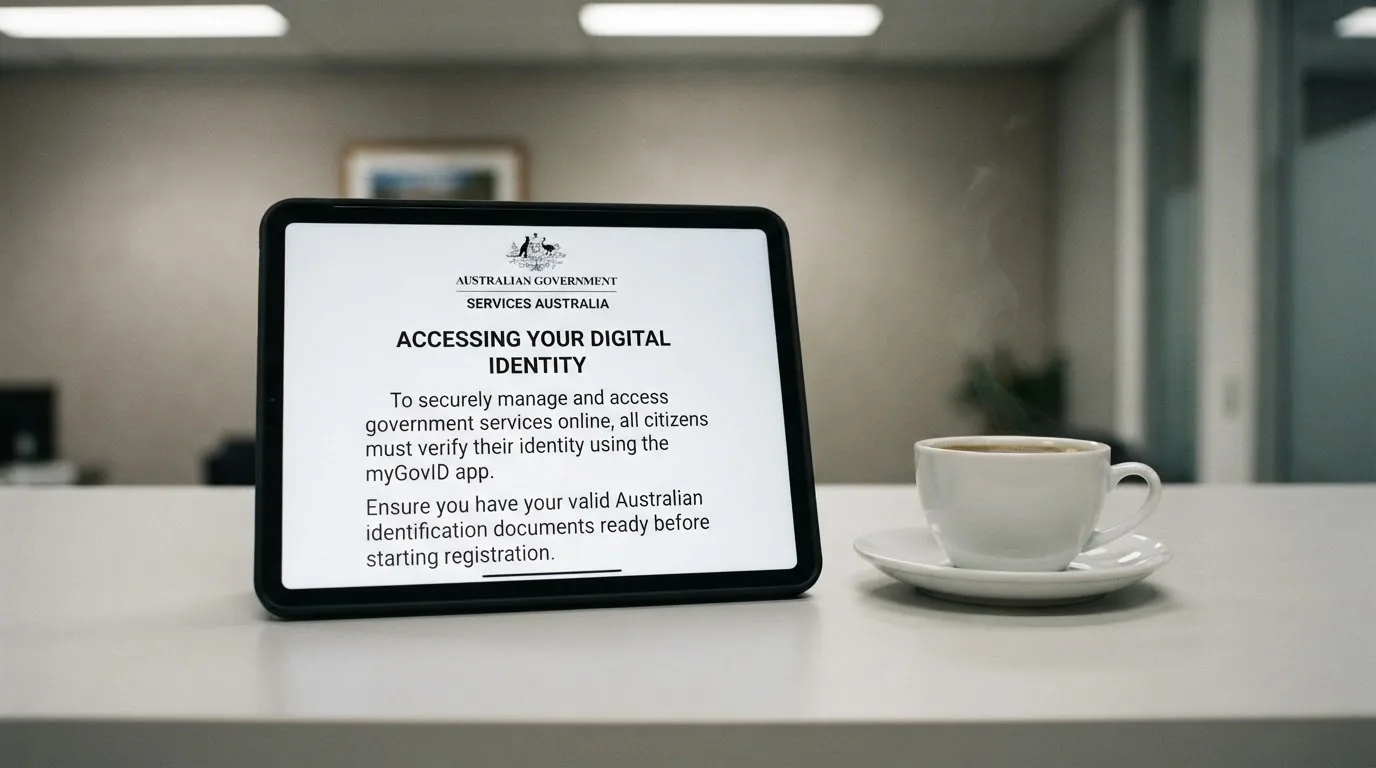
The 2017 amendment added the enforcement teeth. The ACMA can now investigate, issue formal warnings that are published on its website, and direct Australian internet service providers to block illegal services at the network level. By June 2026 the ACMA had asked for 1,751 illegal gambling and affiliate websites to be blocked since the first blocking request in November 2019, and more than 230 unlicensed services had left the Australian market since 2017. The most recent reported round, on 26 June 2026, named 12 brands: 7Signs, ChromaBet, Donbet, Duospin, Freshbet, Slots Gem, Jacks Club, Lucky Start, Pointsbetz, Spinrise, Vinyl Casino and Wildsino. Each round works the same way: the regulator publishes the names, the ISPs block them, and the brand either moves or quietly reappears at a new address.
The individual Australian player is not the target of the Act. The IGA is aimed at the provider, which is why no reader of this page is at personal legal risk for having tried one of these apps. What the player loses is the protection an Australian licence would normally carry: no dispute resolution through an Australian body, no recourse if a withdrawal stalls, no certainty that a balance left on a blocked account will be returned. That is the trade. The Act punishes the operator, and the reader pays the consequence.
The 2026 reform package sits one step ahead of this. The Interactive Gambling Amendment (Gambling Reform) Bill 2026 passed Parliament on 19 August 2026, and its advertising and inducement measures commence on 1 January 2027. The bill is law with a start date, not yet in force on a 2026 page, so it does not yet change what an offshore app can advertise to an Australian reader, but it will.
What an Australian reader gives up by playing offshore
The BetStop register, the National Self-Exclusion Register, has been live since August 2023 and binds every Australian-licensed online and phone wagering service. The mechanics are simple: a person signs up once, and every licensed operator is required by law to refuse them service. Offshore casinos are not connected to BetStop, which means the most effective single tool the Australian system has built for problem gambling does not apply to them. The National Gambling Helpline on 1800 858 858 runs free, 24/7, with chat at Gambling Help Online, and that route is open to anyone regardless of where they play.
The payments story is the second giveaway. Credit cards, credit-related products and digital currency are banned as payment for licensed online wagering from 11 June 2024, with penalties up to A$247,500 for operators that breach the rule. A licensed Australian wagering service takes debit card, bank transfer, PayID/Osko and BPAY. A site asking for a credit card or a crypto deposit is operating outside the Australian rules, which is consistent with it being outside the Australian law. The reader who sees a “deposit with Bitcoin” button on an app labelled as Australian-friendly is being shown the gap between the marketing and the regulator.
H2 Gambling Capital’s 2025 estimate is that Australians lose about A$3.9 billion a year to illegal gambling sites, and the share of gambling going through legal channels fell from 74 percent in 2021 to 64 percent. The legal share dropping while the illegal share grows is what the ACMA’s blocking rounds are aimed at, and the apps on an Android phone are a meaningful slice of that illegal share.
How a real money pokies app presents itself on an Android phone
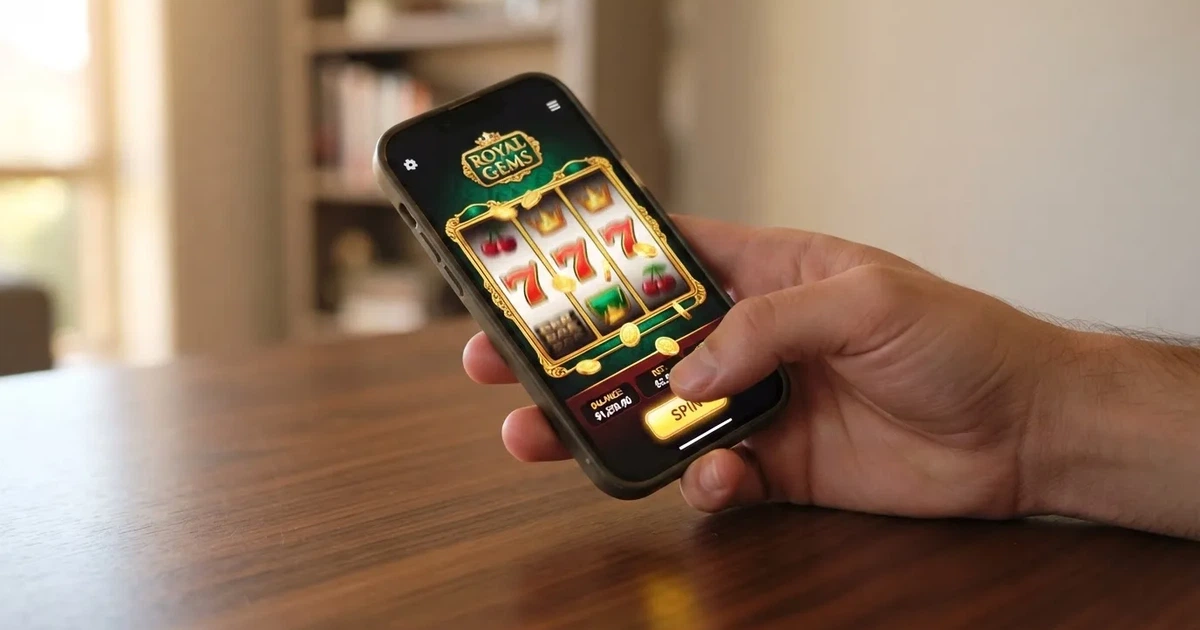
The pitch from an offshore app is built for the touchscreen. A hand lands on the phone, a thumb hovers over the icon, and the app promises what every casino app promises: hundreds of titles, a deposit button, and a withdrawal route that works in Australian dollars. The mechanics that make a pokies app feel native to the device are not what the law is concerned with. What the law is concerned with is the underlying product — a real money wager on the outcome of a virtual reel — and whether that product is licensed for supply to a person physically in Australia. None of them are.
A few features are worth naming because they recur across the apps that have come under ACMA action, and because each one gives the reader something to check rather than to assume. A real money pokies app typically asks for permissions the user does not expect: access to storage to write a hidden configuration file, access to the device’s installed-app list so the operator can read whether competing casino apps are installed, and access to read phone state so a session can be paired with a unique device fingerprint. None of those permissions are required to spin a virtual reel. They exist to harden the operator’s grip on the account against the moment the user tries to withdraw. The reader who is asked for unusual permissions on install is being asked to hand the operator the means to contest their own withdrawal.
Sideloading an APK — installing an app from outside the Google Play Store — is the other common feature. Google Play’s policies prohibit real money gambling apps from being distributed to Australian users, so the offshore operators ship their Android product as a downloadable APK from a website rather than as a listing on a store. The user who follows the link, downloads the file and toggles “install from unknown sources” has just walked past the only gatekeeper that sits between them and the app. That is the gatekeeper doing its job. A browser-based version of the same product usually exists, because the operator wants every entry path covered, and the choice between the APK and the browser version is not a choice between safer and riskier: it is a choice between two doors into the same offshore operator, neither of which is Australian-licensed.
A free Aristocrat-style pokies app differs from a real money pokies app in one structural way: the free app takes no deposit and pays no withdrawal. Aristocrat itself, the Australian slot manufacturer whose physical machines line the floors of clubs and casinos from Sydney to Perth, does not publish a real money online product for Australians because the law will not let it. What an Android user finds when they search “Aristocrat pokies” is mostly clones — third-party apps using Aristocrat-style artwork and game mathematics without Aristocrat’s involvement. The clone is free to download, sits in the app store, and never pays real money because it never takes real money. The real money version, where it exists, lives outside the store, asks for permissions a free clone would not, and operates under a licence from a jurisdiction that is not Australia.
What the ACMA has actually done
The ACMA’s published register of formal warnings is the cleanest record of what has happened to specific offshore brands in front of Australian readers. The warnings are public, they name the operator company and the brand, and they are the regulator’s own statement of the facts rather than a marketing site’s characterisation of them.
In March 2026 the ACMA issued a formal warning to Pulsup Ltd over RocketPlay. Earlier, in May 2022, the same Rocketplay brand had been the subject of a Dama N.V. warning covering six casino properties — Bambet, Dazard, Level Up, Rocketplay, Wild Tornado and Cobra Casinos. Dama N.V. returned to the warning register in March 2025 over Woo Casino, and again in May 2025 over Spirit Casino. In July 2025 the ACMA issued formal warnings to Bamboo Media over Ignition Casino and to Consolutetish S.R.L. over National Casino and Bizzo Casino; Bizzo had already been the subject of a 2022 warning to TechSolutions (CY) Group Limited and TechSolutions Group N.V. EOD Code SRL drew a warning in February 2025 over Instant Casino. In April 2026 Ryker B.V. drew a warning over Jackbit and CasinOK. Sterplay Holding Ltd drew a warning in April 2025 over Casino Intense. Hollycorn N.V. drew a warning over its Sky Crown and Blue Leo casino services in September 2022.
The names recur. Dama N.V. alone accounts for four separate warnings across two and a half years. Consolutetish S.R.L. and its predecessor TechSolutions account for two. The pattern is not a single bad-faith operator and a clean market elsewhere. It is the same set of operators cycling through new brand names while the underlying company stays the same, and the ACMA following them.
The blocking rate the ACMA has set
The arithmetic that gives this story its shape is the rate at which the ACMA has asked ISPs to block illegal sites. The first blocking request was issued in November 2019. By the end of June 2026, the running total was 1,751 blocked sites. That works out to a little over 260 sites blocked per year, or roughly five per week, across the seven years the regime has been in force. The most recent reported round named 12 sites in a single instruction. Earlier rounds have named more. The rate is not slowing. If anything, it has stepped up as the ACMA has automated parts of the referral pipeline through affiliate marketing sites that point Australian users at offshore casinos.
The condition on the figure matters. The 1,751 number counts sites and affiliate marketing pages blocked since November 2019. It does not count the brands themselves, because one brand often operates several domains, and a rebrand at a new address resets the count. It does not count the apps themselves, because the ACMA’s blocking power runs through ISPs rather than through app stores. The reader who sees 1,751 should read it as the size of the address book the regulator has built up, not as the size of the underlying market. The market is larger than the address book; the address book is the regulator’s working file.
Comparison of the operators the ACMA has acted against
The eleven brands below are the operators the ACMA has named in formal warnings for offering prohibited services to Australians. The table is not a ranking. Each brand sits on the list because the regulator has done something about it, and the order is the regulator’s working order, not a recommendation.
| Brand | ACMA action and date | Operator named by the ACMA | Subject support |
|---|---|---|---|
| RocketPlay | Formal warning, March 2026 (earlier May 2022) | Pulsup Ltd (earlier Dama N.V.) | — |
| Level Up Casino | Formal warning, May 2022 | Dama N.V. | BGaming listings |
| Woo Casino | Formal warning, March 2025 | Dama N.V. | — |
| Spirit Casino | Formal warning, May 2025 | Dama N.V. | — |
| National Casino | Formal warning, July 2025 | Consolutetish S.R.L. | Wikipedia listings |
| Bizzo Casino | Formal warning, July 2025 (earlier 2022) | Consolutetish S.R.L. (earlier TechSolutions) | — |
| Ignition Casino | Formal warning, July 2025 | Bamboo Media | — |
| Instant Casino | Formal warning, February 2025 | EOD Code SRL | — |
| Jackbit | Formal warning, April 2026 | Ryker B.V. | — |
| Casino Intense | Formal warning, April 2025 | Sterplay Holding Ltd | ABC / ACMA / Crown Melbourne listings |
| Sky Crown | Formal warning, September 2022 | Hollycorn N.V. | — |
A blank cell in the right-hand column means the research could not pin a subject-specific claim to the brand on independently checkable grounds, and the brand is not endorsed on the strength of its own marketing. Where a listing source is named, the brand appears in a third-party directory or register that does not speak for the brand itself, and the reader should weigh the listing accordingly.
The shape of the table is the shape of the market. Eleven brand names, eight operator companies, and two operator companies (Dama N.V. and Consolutetish S.R.L.) accounting for five of the eleven brand entries. The market the ACMA is dealing with is small, recurring, and well known to the regulator. The reader who recognises three of these brand names from previous browser tabs is not looking at a long tail; they are looking at the head.
What an Australian reader should check before trusting one
A real money pokies app that targets an Australian reader will fail one or more of the following checks. The reader who runs through them in order will arrive at the same conclusion the regulator has reached on the named brands above.
A licensed Australian operator carries a licence number tied to a state or territory regulator. The Northern Territory Racing and Wagering Commission is the most common issuer for online bookmakers, because Northern Territory licences are the route through which licensed Australian wagering services operate. An offshore casino does not have a Northern Territory licence because no Northern Territory licence covers online casino games, and the ACT, NSW, Victoria, Queensland, South Australia, Western Australia and Tasmania have no licence for the product either. The reader who asks “where is this app licensed to take my deposit?” and gets back a Curaçao or Anjouan licence number has been told that the product is not licensed for Australia.
A licensed Australian wagering service accepts debit card, bank transfer, PayID/Osko and BPAY. It does not accept credit card or crypto. A site asking for a credit card or a Bitcoin deposit is operating outside the Australian rules, and a reader paying through that route has no Australian consumer protection on the transaction.
A licensed Australian wagering service is connected to BetStop. A person on the National Self-Exclusion Register is refused service by every licensed operator. An offshore casino is not connected to BetStop, which means a self-excluded Australian can still deposit at one. That is the clearest practical demonstration of what an offshore operator gives up: the single Australian system that exists to help people stop cannot reach them.
A licensed Australian operator answers to an Australian complaints body. The reader who has a dispute with an offshore casino has recourse to the operator’s home regulator at most, and the operator’s home regulator has no jurisdiction over an Australian player. The dispute mechanism on most offshore apps is an in-house email address that the operator controls end to end. The reader who files a complaint has filed it with the party they are complaining about.
The reader who runs those four checks will arrive at a yes-or-no answer. The market the ACMA has acted against does not pass any of them.
What to do if a real money pokies app is already on the phone
An app that is already installed and already holds a balance is a different problem from an app that has not yet been downloaded. The phone-level steps are the same for both: uninstall the app, revoke the permissions it was granted through the phone’s settings, clear the browser cache if the same operator also runs a browser version, and change the password on any account that reused the same credentials as the casino account. The balance on the offshore account is a separate question. The ACMA’s blocking rounds do not return balances, and the offshore operator has no obligation to do so. The reader who is owed money by a blocked operator is in the position of any creditor of an offshore company, and the practical answer is to raise a dispute through the operator’s own support channel while it is still answering email.
The reader who has lost more than they meant to on one of these apps has the same options the Australian system offers any Australian gambler. BetStop will not exclude them from the offshore operator, because the offshore operator is not connected, but it will exclude them from every licensed Australian wagering service, which is most of the Australian-facing wagering market. The National Gambling Helpline on 1800 858 858 is free, 24/7, with chat at Gambling Help Online. A financial counsellor can be reached through the National Debt Helpline on 1800 007 007. These services are not routed through any casino and do not report back to one.
Frequently asked questions
Can a real money pokies app actually be downloaded through the Google Play Store in Australia?
No. Google’s policies do not allow real money casino apps to be distributed through the Play Store to Australian users, because the Interactive Gambling Act 2001 prohibits the supply of online casino games to people in Australia. The offshore apps an Android user finds through search results are almost always distributed as APK files from a website, with “install from unknown sources” enabled on the device.
Is sideloading a real money pokies APK onto an Android phone something Australians can legally do?
The Act targets the provider, not the player. An Australian who sideloads an APK is not personally committing an offence under the Interactive Gambling Act 2001. What the player loses is the protection an Australian licence would carry: no dispute resolution through an Australian body, no recourse if a withdrawal stalls, and no certainty a balance on a blocked account will be returned.
How does a free Aristocrat-style pokies app differ from one that claims real money play?
A free app takes no deposit and pays no withdrawal, which keeps it outside the Interactive Gambling Act’s prohibited service. A real money version takes a deposit and pays a withdrawal, which puts it inside the prohibited service. Aristocrat itself does not publish a real money online product for Australians because the law will not let it; what an Android user finds by searching “Aristocrat pokies” is mostly third-party clones using Aristocrat-style artwork without Aristocrat’s involvement.
What permissions does a real money pokies app typically ask for on an Android phone?
Common requests include storage access to write a hidden configuration file, access to the installed-app list to read which competing casino apps are present, and access to phone state to pair a session with a unique device fingerprint. None of those permissions are required to spin a virtual reel. A reader who is asked for unusual permissions on install is being asked to hand the operator the means to contest their own withdrawal.
Why would an app be advertised as “download for Android” rather than just playable in a browser?
Because the Play Store will not list it. Google’s distribution policies block real money casino apps from Australian users, so the offshore operator ships an APK from a website and pitches it as a download. A browser version of the same product usually exists at the same operator. The choice between the APK and the browser is not a choice between safer and riskier; it is two doors into the same offshore operator, neither of which is Australian-licensed.
What should someone check before trusting an app’s claim to pay real money on Android?
The four checks that decide the question: a real Australian operator carries a licence tied to a state or territory regulator and no such licence covers online casino games; a real Australian wagering service takes debit card, bank transfer, PayID/Osko and BPAY, not credit card or crypto; a real Australian operator is connected to BetStop and an offshore casino is not; a real Australian operator answers to an Australian complaints body and an offshore operator answers only to itself. An app that fails any one of those four is offshore. The market the ACMA has acted against fails all four.